


Gnosticism and Early Christianity
Streaming coming soon
Questions? administration@junginla.org
Twelve-week seminar (1994) on the first centuries of Christianity as two competing streams: the Church, from Paul to Augustine, and Gnosticism, from Simon Magus to Mani. Edinger treats both as expressions of the emerging Christian God-image and argues that their reconciliation is a task for the modern psyche. Published as The Psyche in Antiquity, Book Two (1999).
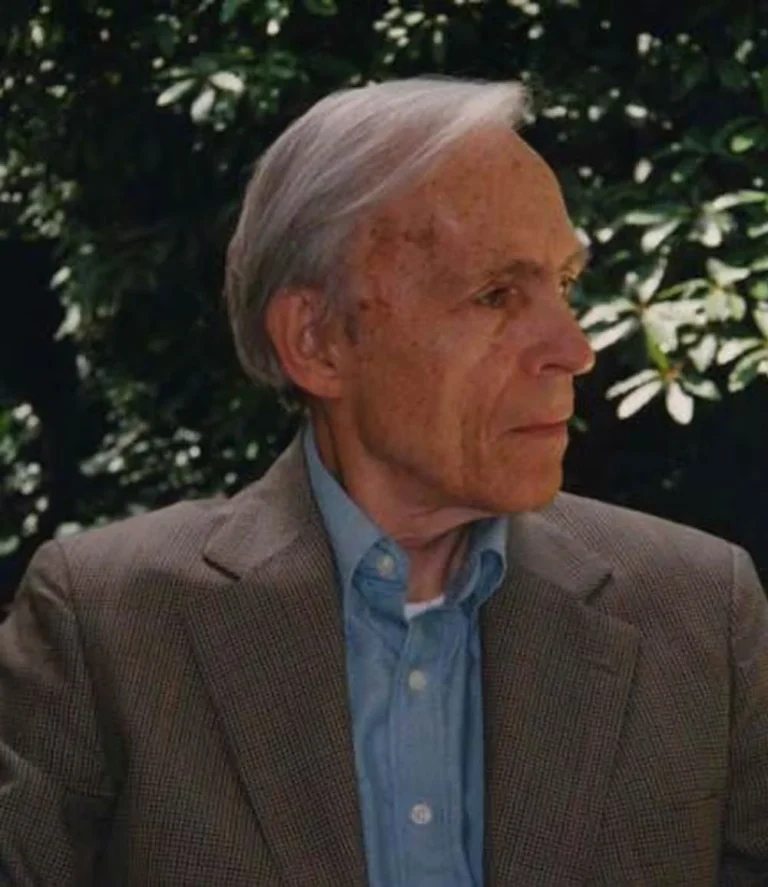
Edward F. Edinger
Edward F. Edinger (1922–1998) was an American psychiatrist and Jungian analyst, widely regarded as one of the most important interpreters of Jung. Trained in medicine at Yale, he worked in analysis with Esther Harding and was a founding member and later president of the C.G. Jung Foundation in New York. In 1979 he moved to Los Angeles, where he was a senior analyst at the C.G. Jung Institute and gave the lecture series recorded here. His books include Ego and Archetype (1972), The Creation of Consciousness (1984), Anatomy of the Psyche (1985) and many volumes drawn from his lectures.
Parts
-
Part 1: Introduction: Two Streams
1:03:23
Course texts: Hans Jonas's The Gnostic Religion, 'the best concise text in English', and Henry Chadwick's The Early Church (or W.H.C. Frend's livelier book of the same title), with the Ante-Nicene Fathers and G.R.S. Mead's Fragments of a Faith Forgotten for depth. Then the course's framework: the messianic archetype at the time of Christ and the two streams that followed.
-
Part 2: Paul of Tarsus
1:09:39
Paul, 'the giant figure'. Edinger first summarises his biography: born about AD 10 in Tarsus, a large Greek trading city with a Jewish community; of Jewish parents of the tribe of Benjamin, named Saul after the king; a Roman citizen with a Roman name; speaking Aramaic at home, Greek in the city and Hebrew at synagogue school; trained as a Pharisee. Then his conversion and theology.
-
Part 3: Simon Magus
1:13:13
Simon Magus. The activation of the Messiah archetype two thousand years ago created two pathways: Paul's led to the Church, containing the archetype in a collective institution; Simon's was the fountainhead of Gnosticism, where the archetype takes possession of the individual, with all the dangers of inflation. Edinger also sets out how Gnosticism differs from ecclesiastical Christianity.
-
Part 4: Marcion
1:13:08
Marcion of Sinope on the Black Sea, a wealthy and successful shipowner who in mid-life turned his energy to theology. He formulated a system and organised a rival church, rejecting the God of the Old Testament. References: Jonas, Mead, Harnack's History of Dogma, and Tertullian's Against Marcion.
-
Part 5: Basilides
1:10:27
Little is known of Basilides the man, whom Jung, in a 1917 letter, called one of the great minds of early Christianity that the Church obliterated. He is mentioned 27 times in the later Collected Works and figures in Jung's Seven Sermons to the Dead. Edinger reconstructs his system from Hippolytus and Irenaeus.
-
Part 6: Valentinus
1:09:43
Valentinus, possibly the most prominent Gnostic, with a stature in antiquity few could match, though almost nothing is known of his life (born in northern Egypt, educated at Alexandria). Besides Irenaeus and Hippolytus there is an authentic Valentinian document from Nag Hammadi, the Gospel of Truth, in Grobel's annotated translation. His myth of the Pleroma and Sophia.
-
Part 7: Clement of Alexandria
1:09:32
The first of the Church side's Christian Platonists. Edinger reads Charles Bigg's account (The Christian Platonists of Alexandria, 1886, still in print): a Greek, probably Athenian, of pagan parents, who wandered far and wide in search of truth until he found Pantaenus, head of the catechetical school at Alexandria.
-
Part 8: Origen
1:08:54
Origen, Clement's successor at the catechetical school and with him the major Christian Platonist: born in Alexandria, an Egyptian (Copt) of Christian parents, yet named for the god Horus ('child of Horus'). References: Chadwick, Harnack and Bigg, and Butterworth's annotated edition of his textbook of theology, On First Principles.
-
Part 9: Tertullian
1:10:05
The first Latin author of the course and 'father of Latin Christianity': born in Carthage to pagan parents, son of a Roman centurion, by his own account a great sinner in his youth, and well educated. Edinger sees in him 'the psychology of a brilliant, passionate prosecuting attorney'. Readings include his 'Testimony of the Soul' and Jung, CW 6 u00b617u201330.
-
Part 10: Mani
1:08:38
Mani (216u2013276). Edinger justifies close attention with Jung's surprising letter of 30 April 1929: 'Jesus, Mani, Buddha, and Lao-tse are for me the four pillars of the temple of the spirit.' References: Jonas, Mysterium Coniunctionis u00b631u201335, and H.-C. Puech's Eranos paper on Manichaeism. Then Mani's life and his dualism of Light and Darkness.
-
Part 11: Augustine
1:13:44
Augustine (354u2013430), the only post-Nicene figure in the course. After the Council of Nicaea and Constantine's conversion, Augustine completed the consolidation of orthodox dogma. 'In many respects he is the Church': Catholic orthodoxy, medieval scholasticism and even the Protestant Reformation all go back to him. Readings: Chadwick, the Confessions, and Vernon Bourke's The Essential Augustine.
-
Part 12: Conclusion
1:19:25
Closing remarks. The course has examined the consequences of the eruption of the archetype of the Son of God into the collective psyche two thousand years ago. Its effects divided into two streams: the Gnostic, stressing knowledge and individual experience; and the ecclesiastical, stressing faith and communion, which became the Catholic Church after a bitter conflict between the two.