


A Psychological Approach to the Old Testament
Streaming coming soon
Questions? administration@junginla.org
Thirty lectures in two semesters (16 + 14 classes), given in Los Angeles around 1985–86 (Lecture 19 opens with the February 1986 release of Natan Sharansky). Edinger reads the Old Testament book by book, from Genesis to Malachi, as primordial images of the developing ego and its encounter with Yahweh as the Self. Each session was an hour’s lecture followed by a half-hour discussion of practical and personal applications. Related book: The Bible and the Psyche (1986).
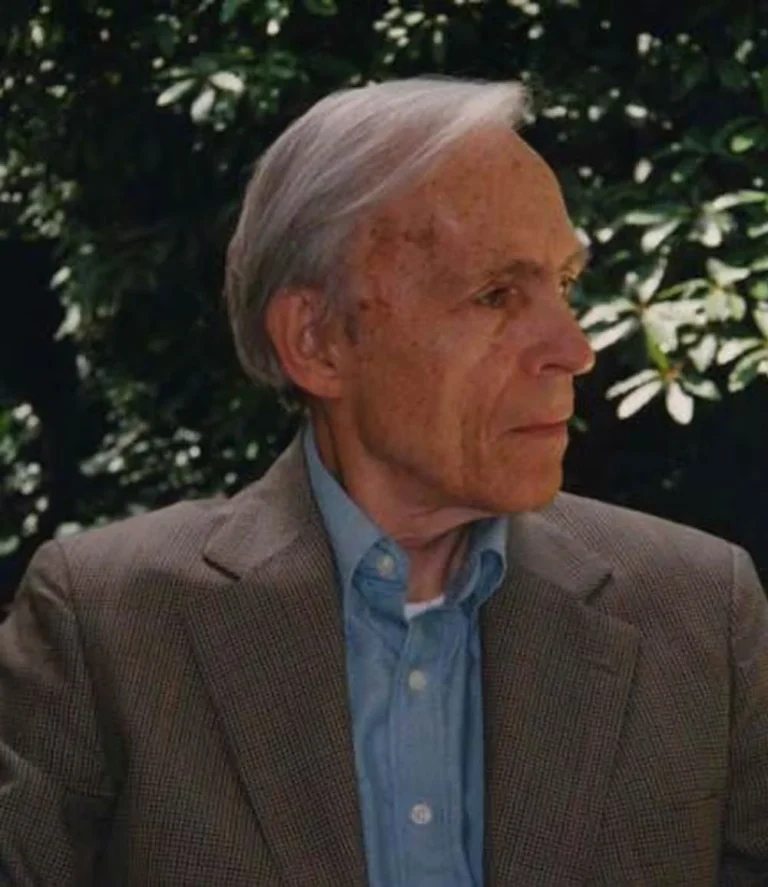
Edward F. Edinger
Edward F. Edinger (1922–1998) was an American psychiatrist and Jungian analyst, widely regarded as one of the most important interpreters of Jung. Trained in medicine at Yale, he worked in analysis with Esther Harding and was a founding member and later president of the C.G. Jung Foundation in New York. In 1979 he moved to Los Angeles, where he was a senior analyst at the C.G. Jung Institute and gave the lecture series recorded here. His books include Ego and Archetype (1972), The Creation of Consciousness (1984), Anatomy of the Psyche (1985) and many volumes drawn from his lectures.
Parts
-
Part 1: Introduction to the Course; Genesis 1:1
1:20:23
Edinger explains the format (an hour's lecture, then half an hour of discussion on psychological and personal applications) and asks students to read each week's assignment with one question in mind: what does this mean psychologically? He recommends the Jerusalem Bible, or the New American Bible as an alternative, and leaves out the Apocrypha. The recap in Lecture 2 shows the session went on to the first verse of Genesis.
-
Part 2: Genesis 1–24: Creation to Abraham
1:01:29
Covers the creation, the making of man and woman, Cain and Abel, Noah and the flood, and the Tower of Babel. Edinger skips Eden and the Fall, referring students to his treatment in Ego and Archetype. Most of the evening goes to Yahweh's developing relationship with Abraham, read as an early image of the ego's dealings with the Self.
-
Part 3: Genesis 25–50: Jacob and Joseph
1:01:02
The story of the twins Jacob and Esau and the stolen birthright, Jacob's ladder and covenant, and the major image of his wrestling with the angel of Yahweh. Then Jacob's twelve sons by four wives and the story of Joseph: the favourite and dreamer, his coat, his sale into slavery and his rise in Egypt to become the saviour of his family.
-
Part 4: Exodus: Moses and Yahweh
1:03:08
Summarises Exodus: slavery in Egypt, Moses' birth and flight, his call, the dispute with Pharaoh, the ten plagues, the crossing of the Red Sea, and the theophany and covenant at Sinai with the instructions for the Ark and Tabernacle. Edinger confines his remarks to the unfolding encounter between Moses and Yahweh and holds the Ten Commandments over to a later evening.
-
Part 5: Leviticus: Covenant, Tabernacle and Sacrificial Cult
1:00:02
Picks up at Sinai with the content of the revelation: the Ten Commandments, the plans for the Tabernacle and the Ark of the Covenant, and the ritual of the sacrificial cult that fills Leviticus, all set within a perpetual covenant. Edinger reads and interprets the covenant-sealing ritual of Exodus 24 for its psychological meaning.
-
Part 6: Numbers
1:09:11
Opens with material left over from Leviticus: the severe laws on sexuality, which Edinger reads as a sign of the numinosity of the sexual instinct and of the effort to build a spiritual counter-pole able to stand against nature and instinct, the basis of a new developmental level. He then turns to the book of Numbers and the wilderness wanderings.
-
Part 7: Deuteronomy; Balaam's Ass
1:02:25
Begins with the episode of Balaam (Numbers 22): summoned by the king of Moab to curse Israel, Balaam is allowed to go but is blocked on the road by the angel of Yahweh, seen first by his donkey. Edinger explores its psychology before moving on to Deuteronomy, Moses' farewell restatement of the law.
-
Part 8: Joshua: Entering the Promised Land
1:03:56
Moses is dead and Joshua leads Israel across the Jordan behind the Ark. Topics include the spies and the harlot Rahab, the mass circumcision and Passover, the fall of Jericho, the ban on spoils, Achan's violation and the defeat it brings, and the conquest of Canaan, all read as stages in the ego's taking possession of its territory.
-
Part 9: Judges and Ruth
0:58:50
Edinger restates his method: the history of Israel is read as a set of primordial images of the developing ego, whose equivalents regularly appear in analysis. In Judges Israel moves from nomadic to settled life after the conquest of Canaan, which he treats as a recognisable phase of ego development. The book of Ruth is also assigned.
-
Part 10: 1 Samuel: Samuel and Saul
1:01:54
Covers the birth and dedication of Samuel and his calling, the capture of the Ark by the Philistines and its destructive effect on them, and the founding of kingship with the choice of Saul. Saul's early success, loss of Yahweh's favour and suicide are set against the rise of David. Edinger presents Saul as the first, failed stage of egohood.
-
Part 11: 2 Samuel: David
1:00:48
Almost entirely about David, as the second, successful stage of egohood following the failed Saul: the old king replaced by the new against his resistance. Edinger notes David as the youngest of Jesse's eight sons (a double quaternity) and as one of several shepherds called to a higher destiny, an image of the young ego chosen by the Self.
-
Part 12: 1 Kings: Solomon and the Queen of Sheba
1:00:09
Introduces Solomon: his acts of wisdom, legendary riches, and the building of the Temple and royal palace, with the visit of the Queen of Sheba as the central image. Then Yahweh's displeasure and the split of the kingdom into Israel in the north and Judah in the south, with their separate lines of kings. Elijah is held over to the next class.
-
Part 13: 1 & 2 Kings: Elijah
0:59:24
Completes 1 Kings with the figure of Elijah, held over from last time, and starts 2 Kings, whose main content is the end of Elijah's life and his ascension. Edinger warns he will not finish and will carry material into the next class, since Chronicles largely repeats the history already covered.
-
Part 14: 2 Kings, continued: Ahab and Micaiah
1:01:07
Continues 2 Kings, starting from last week's cliffhanger in 1 Kings 22: Yahweh decides Ahab will die in battle. Ahab's 400 prophets promise victory in unison, but the true prophet Micaiah reports his vision of Yahweh enthroned, sending a lying spirit to deceive them. Edinger examines this chilling image of how the Self can bring about the ego's downfall.
-
Part 15: Ezra, Nehemiah and Esther
1:01:11
Sets the historical stage: the second, final deportation of 587 BC and the roughly seventy years of Babylonian captivity, ended when Persia conquered Babylon. Ezra leads the first exiles home to rebuild the Temple (around 530 BC); a few generations later Nehemiah rebuilds the walls of Jerusalem. The book of Esther is also assigned.
-
Part 16: 2 Chronicles; The Chosen People
0:57:02
Since 2 Chronicles reviews history already covered, Edinger uses the evening for images that run through the whole Old Testament, chiefly the archetype of being chosen by God, discussed in Rivkah Kluger's essay in Psyche and Bible. Being elected, called or given a special task in God's service is, he argues, a central theme of the individuation process.
-
Part 17: Job
1:00:52
The Book of Job as Jung saw it in Answer to Job: a paradigm of an encounter between the ego and the Self with special meaning for our time. The ego is wounded, the wound provokes a descent into the unconscious, and because Job keeps questioning the meaning of his experience, his endurance is rewarded with divine revelation. Edinger treats Job as the pivot of the Old Testament.
-
Part 18: Psalms, Part 1
0:57:26
Edinger presents the Psalms as a condensed epitome of the whole Bible, Old and New Testaments: the suffering Messiah is drawn so clearly there that it foreshadows the life of Christ, and the New Testament could almost be reconstructed from them. He suggests Christ was especially steeped in the Psalms, noting fourteen quotations in Matthew alone, most spoken by Christ.
-
Part 19: Psalms, Part 2
1:01:41
Opens with news of the Soviet dissident Natan Sharansky, who refused to leave his labour camp without his small book of Psalms. Edinger then reads Psalm 51, the Miserere, the great penitential psalm of contrition and implied original sin, and uses it to discuss the psychology of confession, quoting Jung's remarks from 'The Symbolic Life' (1939).
-
Part 20: Proverbs and the Figure of Wisdom
1:02:00
Proverbs, with the apocryphal Wisdom of Solomon and Ecclesiasticus as companion books, introduces the great archetypal figure of Wisdom, the feminine personification of divine wisdom, which Edinger translates as the personification of consciousness in the cosmos. He first reviews how the course has moved through the Old Testament canon to reach the wisdom books.
-
Part 21: Ecclesiastes and Song of Songs
1:01:02
Edinger restates his view that Job is the pivot of the Old Testament: before it come history and the collective life of the nation; after it come hymns, poems, proverbs and the individual voices of the great prophets. He then discusses Ecclesiastes and the Song of Songs, holding the assigned chapters of Isaiah over to the next class.
-
Part 22: Isaiah 1–39: First Isaiah
0:59:33
Begins the third part of the Old Testament, the prophets (17 books of history, 5 of wisdom and poetry, 17 of prophets). Edinger notes the scholarly view that Isaiah has at least two authors, the 8th-century prophet and the exilic Second Isaiah. He argues the book holds together through one archetypal image, the messianic advent, and turns to First Isaiah's 'day of Yahweh's wrath'.
-
Part 23: Isaiah 40–66: Second Isaiah
0:59:21
Second Isaiah, written some two hundred years later during the Babylonian exile. Edinger argues that the two parts form an organic whole psychologically and symbolically: the first is a book of doom, addressed to an arrogant nation that ignores Yahweh; the second is a book of consolation. He traces images shared by both sections.
-
Part 24: Jeremiah, Part 1: The Prophet as Archetype
0:58:31
Jeremiah, perhaps the supreme Old Testament prophet, makes the archetype of the prophet unusually clear. Edinger considers the implications of that image, starting with etymology: Greek prophetes, 'one who speaks out before all', and mantis, a diviner or seer, from which come 'mantic' and manteion, an oracle.
-
Part 25: Jeremiah, Part 2
1:00:14
Edinger calls Jeremiah perhaps the most powerful figure in the Old Testament, unique in revealing the personal psychology of a prophet: his agonising conflict over his vocation and the ordeal it imposed. Jeremiah had no personal life; it was sacrificed to his mission. Edinger speculates that Jeremiah could even have written the Book of Job.
-
Part 26: Lamentations and Ezekiel 1–22
1:01:38
Lamentations is made of five acrostic poems whose 22 verses follow the Hebrew alphabet, like Psalm 119. Edinger, writing an acrostic on the blackboard, considers the symbolic meaning of the form as a hidden second dimension of meaning. He then takes up the first half of Ezekiel, including the prophet's commanded symbolic acts that enact Israel's coming fate.
-
Part 27: Ezekiel 23–48; Ego and Self
1:00:31
Follows the second half of Ezekiel 'with some free-ranging', returning to the prophet's symbolic enactments of Israel's fate, such as packing his bundle to act out going into exile. The last part of the lecture offers further theoretical reflections on the relation between the ego and the Self drawn from the course's study of the prophets.
-
Part 28: Daniel and Hosea
1:00:32
Daniel, a psychologically rich book of powerful dreams and visions. Edinger treats Nebuchadnezzar's dreams of the great statue and of the tree as a dream series, imagining a patient has brought them to analysis, and interprets them in that light. He then makes some remarks on Hosea.
-
Part 29: The Minor Prophets: Jonah
1:00:42
Of the five assigned minor prophets, Edinger concentrates on Jonah, 'a psychological gem', reading the whole book with commentary: the 8th-century prophet whose name means 'dove' is told to warn Nineveh, flees toward Tarshish, and is swallowed and delivered. Brief remarks on the other four are held over to the final class.
-
Part 30: The Minor Prophets: Nahum to Malachi
1:00:53
The last session (class 14 of the second semester) completes the minor prophets with a few words on each book. Edinger starts with Nahum, who prophesied the fall of Nineveh in 612 BC and describes Yahweh as almost the personification of vengeance: 'jealous and a vengeful God… slow to anger but immense in power'.