


Commentary on C.G. Jung’s Answer to Job
Streaming coming soon
Questions? administration@junginla.org
Twelve lectures (fall 1989) giving a commentary on Jung’s Answer to Job. Edinger follows the text section by section, showing how Job’s encounter with Yahweh begins a transformation of the God-image that runs through Sophia, the Incarnation, Revelation and the dogma of the Assumption of Mary, and how that transformation continues in the individual psyche. Published as Transformation of the God-Image (1992).
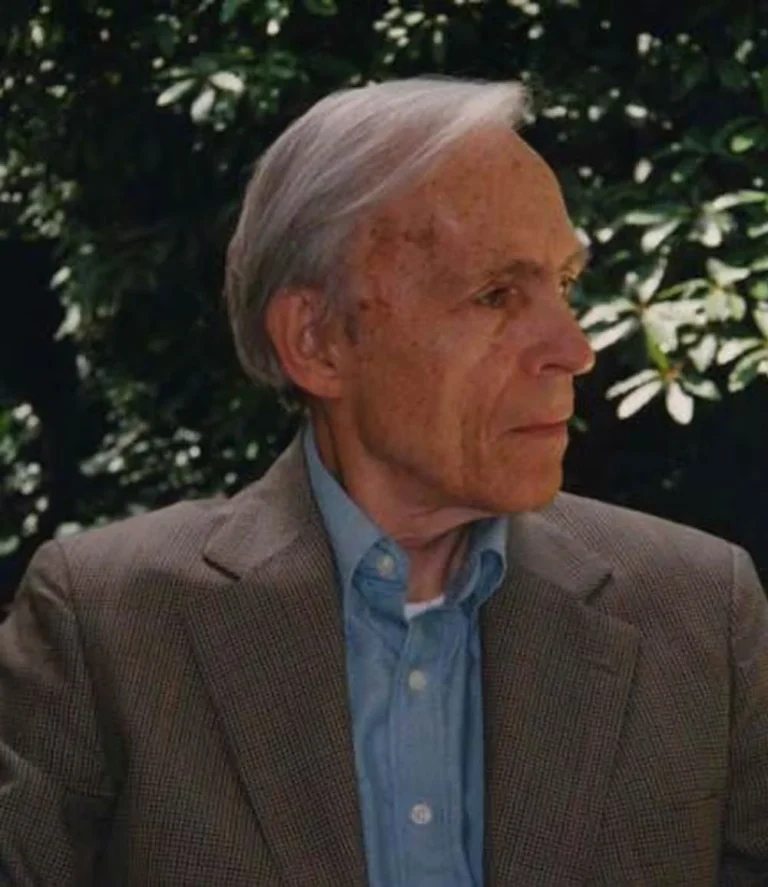
Edward F. Edinger
Edward F. Edinger (1922–1998) was an American psychiatrist and Jungian analyst, widely regarded as one of the most important interpreters of Jung. Trained in medicine at Yale, he worked in analysis with Esther Harding and was a founding member and later president of the C.G. Jung Foundation in New York. In 1979 he moved to Los Angeles, where he was a senior analyst at the C.G. Jung Institute and gave the lecture series recorded here. His books include Ego and Archetype (1972), The Creation of Consciousness (1984), Anatomy of the Psyche (1985) and many volumes drawn from his lectures.
Parts
-
Part 1: Introduction
0:41:56
An introductory session setting the stage for a 'leisurely, detailed study'. Edinger describes Answer to Job as a depth-psychological examination of the Judeo-Christian myth at the core of the Western psyche, and as a continuation of Aion, studied the previous year, as Jung says in his prefatory note (it grew from Aion's problems of Christ as a symbol and the antagonism of Christ and Antichrist).
-
Part 2: Prefatory Note, 'Lectori Benevolo' and the Book of Job
0:45:16
Three parts: the Prefatory Note, the 'Lectori Benevolo' (To the Reader), and the biblical Book of Job, which students were asked to read. Edinger shows how Jung was led to write by the problem of the opposites, met in two areas: the Christian God-image he had studied in Aion, and alchemy.
-
Part 3: Answer to Job ¶560–576
0:45:33
The book proper begins. Edinger goes through the assignment in eight items, giving special attention to the first sentence, as he would to the first dream of a series: 'The Book of Job is a landmark in the long historical development of a divine drama.' He asks what 'divine drama' means and offers his own reading.
-
Part 4: Answer to Job ¶577–608
0:44:14
Starts with ¶574–575, left over from last week: Yahweh as a personality who can be sure he exists only through his relation to an object, and 'existence is only real when it is conscious to somebody', which is why the Creator needs conscious man. Then Yahweh's answer from the whirlwind, Behemoth and Leviathan, and Job's realisation.
-
Part 5: Answer to Job ¶609–624
0:43:21
After a correction at ¶616, seven items, the most substantial being the figure of Wisdom (Sophia), 'a very major archetypal image' to recognise when she appears in dreams. Just as Yahweh personifies the masculine collective unconscious, Wisdom is its feminine personification. Edinger traces her historical evolution and her names in the original languages.
-
Part 6: Answer to Job ¶625–648
0:43:38
Begins with two items left over from ¶621: the perfectionism underlying Yahweh's marriage with Israel, and how the pre-existent Sophia came to compensate Yahweh's attitude in the centuries before Christ. Then the preparations for the Incarnation, including Mary's special status.
-
Part 7: Answer to Job ¶649–661
0:44:04
Seven items, beginning with ¶650: Christ's vision of 'Satan fall like lightning from heaven', a metaphysical event made temporal, marking Yahweh's final separation from his dark son. Satan is banished from heaven but keeps dominion over the sublunary world. Edinger explores the image of a spiritual being falling from heaven to earth.
-
Part 8: The Book of Enoch (¶662–687)
0:45:47
With the Book of Enoch. The theme is the differentiation and transformation of the God-image in history, traced through the visions of Ezekiel (around 550 BC), Daniel and Enoch (completed around 100 BC). Job's profound insight into the deity activates the collective unconscious, and the God-image is obliged to move closer to man.
-
Part 9: Answer to Job ¶688–712
0:45:00
With the Book of Revelation. Edinger first dwells on ¶686: 'The encounter with the creature changes the creator.' Does the modern ego actually experience itself as a creature made by a creator? How one answers determines one's religious position. Then the start of Revelation as a psychological document.
-
Part 10: Answer to Job ¶713–733
0:46:50
Revelation as a massive symbolic image of the Self erupting into consciousness. End-of-the-world dreams are not rare in the nuclear age, and their net effect is often less destructive than it first appears. Edinger reads a vivid example, a middle-aged analysand's dream she titled 'Paradise'.
-
Part 11: Answer to Job ¶734–747
0:46:34
Begins with items left over: the 'eternal gospel' of Revelation 14:6–7, and ¶733 on John's foresight of the dangers of the final phase of the Christian aeon and God's 'terrible double aspect', a sea of grace met by a seething lake of fire.
-
Part 12: The Assumption of Mary and Summary
0:42:18
The final session. Its chief topic is Pius XII's November 1950 dogma of the bodily Assumption of Mary. Edinger notes the image had been present in the Church for nearly a thousand years (the 15 August feast; the Assumption and Coronation in medieval art, citing James Hall), and that what was new was its dogmatisation. He closes with a summary of the course.